

Table of Contents
- How Long Does It Take for a Dental Bridge to Settle in the Mouth?
- Understanding the Adjustment Period for Your New Dental Bridge
- Common Symptoms While Your Bridge Settles In
- What to Do If Your Bridge Feels Uncomfortable After Two Weeks
- Eating and Drinking After Bridge Placement: Timeline and Tips
- Managing Sensitivity and Caring for Your Bridge During the Settling Period
- Your Path to a Comfortable Bridge with Northern Dental
How Long Does It Take for a Dental Bridge to Settle in the Mouth?
How long it takes for a bridge to settle in the mouth is a question we hear often at our Dawson Creek clinic. A new dental bridge typically requires an adjustment period spanning several days to a few weeks before it feels fully natural. This short span lets your bite adapt and the surrounding gum tissue grow comfortable with the restoration. Because everyone’s mouth responds differently—factors like how the teeth meet, personal sensitivity levels and the material of the bridge all play a part—your own settling time may be a bit shorter or a little longer. Taking things slowly and following our straightforward aftercare guidance makes the transition much smoother. Knowing what to expect during this initial window can turn a small uncertainty into a calm and easy experience. If you have questions about how your bridge should be feeling, we’re ready to help in person—Visit Us Today!
Key Takeaways
- When a new dental bridge is placed, the surrounding soft tissues and oral mucosa need time to adapt to the prosthesis.
- Patients will normally notice a few common symptoms during the healing period.
- Most people experience a little tenderness for about two weeks following the placement of their bridges.
- Getting you back onto solid ground again isn’t quite as quick as we’d hope, but don’t worry.
- It’s perfectly normal to notice some increased sensitivity to hot, cold, or pressure after your bridge is placed.
Understanding the Adjustment Period for Your New Dental Bridge
When a new dental bridge is placed, the surrounding soft tissues and oral mucosa need time to adapt to the prosthesis. During this time, your gums, cheeks, and tongue become familiar with the bridge. Many patients wonder how long it takes to get used to a bridge, and while different patients’ experiences vary, the adjustment process is natural and temporary. Patience is key because the mouth gradually accepts the new prosthesis.
Most wearers initially experience some slight pressure on the gums where the bridge fits and some feeling of tightness under the teeth. You might also feel that your mouth has produced more saliva because there’s now something inside your mouth that it hasn’t had before. However this will settle down quite quickly. Some people find that they sound slightly different when speaking at first because your tongue needs time to adjust its position due to the presence of the new structure. Also, gentle tenderness in the gum tissues underneath the replacement teeth can occur. This is all absolutely normal and is your body’s way of reacting to the foreign body within it. If it remains uncomfortable or you still feel there’s a particularly tight area after a while then please do contact us for further advice.
In order to make the transition smoother, we recommend starting with soft foods for the first few meals and cutting everything into small pieces. Starting to chew on either side equally will spread the pressure throughout rather than overload the bridge. As you feel more confident, you can gradually reintroduce harder textures. Practicing speaking by reading aloud or repeating tricky sounds can speed up the tongue’s adaptation. Keeping dental care throughout this part should be maintained carefully; we suggest gentle brushing around the bridge and using a floss threader or water flosser to clean under the artificial tooth. This routine keeps the area healthy while you adjust. Be patient, every mouth adapts differently.
This transition phase may involve different body signs telling you your mouth has adjusted itself to its new situation. Those changes are all completely natural during this period, until you get used to wearing the appliance.
Common Symptoms While Your Bridge Settles In
Patients will normally notice a few common symptoms during the healing period. All of these symptoms should eventually subside once your teeth and gums become used to your bridge.
Some minor gum tenderness or sensitivity along your bridge area may also occur. It will feel as if there is pressure on the gum tissues due to the placement of crowns, whose margins sit just below your gums. This area will need some time for the gum to adjust in a manner similar to when you get a new pair of shoes.
Some people feel minor pressure from their anchor teeth. Your anchor teeth now act as placeholders for the new artificial tooth, but they can bear some additional stress while chewing, which decreases once you get used to the changes in how you chew.
Temperature sensitivity, particularly to cold, surprises some patients. The teeth underneath the crowns may react briefly because the enamel layer was reduced during preparation, leaving dentin that can conduct temperature more readily. Most temperature reactions become noticeably milder within two weeks as everything stabilizes.
Another common feeling when you first get a new bridge is that the bridge seems strange or cumbersome. The tongue and cheeks take a while to become used to their new surroundings and feel the contours of the new bridge in much the same way as they would if the mouth had lost its own teeth. This unfamiliarity usually fades in just a few days.
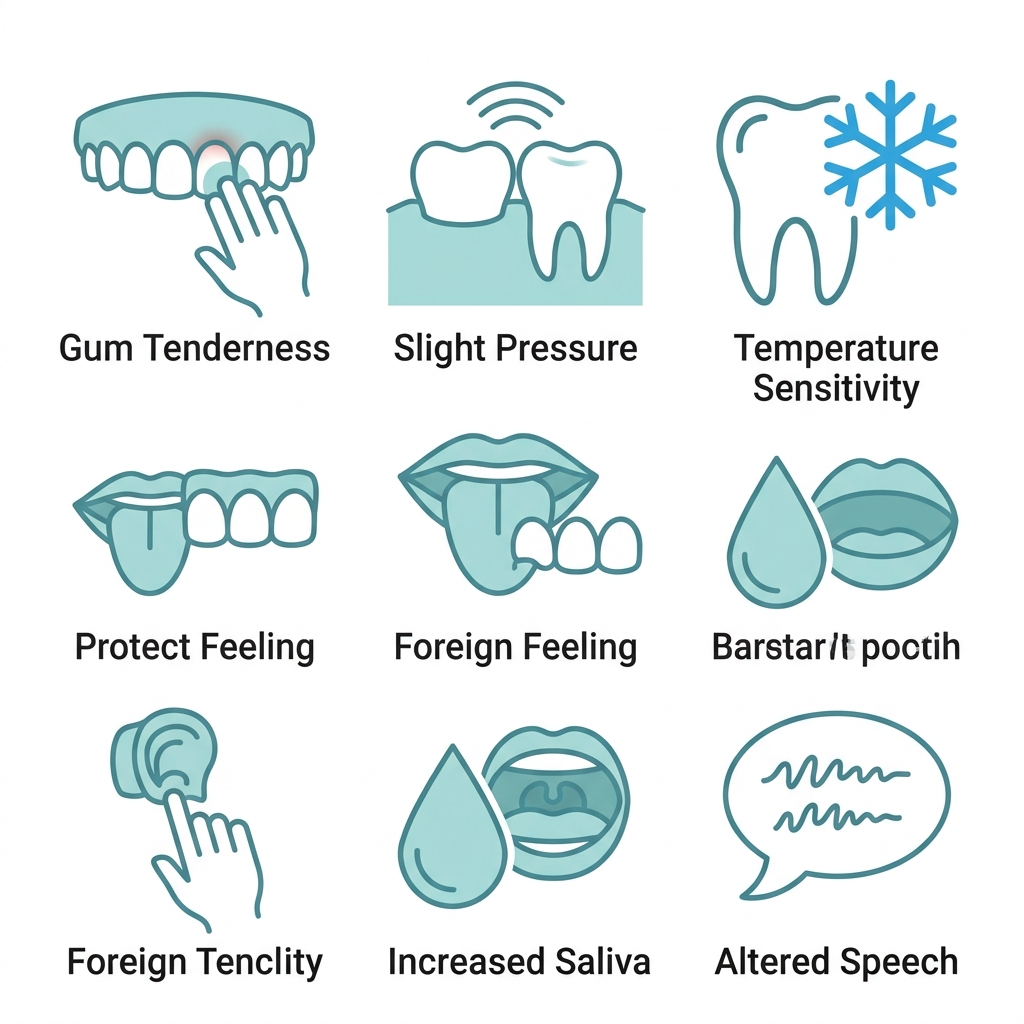
These settling symptoms are almost always short-lived. For most people, noticeable improvement appears within the first week and the mouth feels largely accustomed to the bridge by the end of the second week. Our practice in Dawson Creek encourages you to be patient during this period; if discomfort lingers well past two weeks or seems to get stronger rather than fading, further evaluation becomes important, and that is the next natural step to explore.
What to Do If Your Bridge Feels Uncomfortable After Two Weeks
Most people experience a little tenderness for about two weeks following the placement of their bridges. If you still have pain once this period has ended, you should see your dentist.
Persistent discomfort isn’t simply irritating; it may be a sign the bridge needs a professional touch, and ignoring it can lead to gum irritation or unnecessary wear on the teeth supporting it.
- Start with a gentle self-check. Look in a mirror and run your tongue or a clean fingertip over the bridge, paying attention to any swelling or redness on the gums nearby. Notice whether the bridge feels loose, has a sharp edge, or causes pain when you bite down. Write down what you observe — even small details help our team diagnose the issue faster when you call.
- Never attempt to adjust the bridge at home. It may be tempting to smooth a rough spot or add a bit of adhesive, but glues and household products can trap bacteria and damage the porcelain. Filing the restoration can weaken its structure, and trying to remove it yourself could hurt the teeth underneath or the surrounding gums, potentially introducing bacteria and causing an infection. Only a dental professional has the tools and training to correct the fit without harming your smile.
- Contact Northern Dental and share your symptoms. Call us at (250) 782-3331 as soon as the discomfort isn’t fading. Our team in Dawson Creek will listen carefully, ask about what you’re feeling, and schedule a follow-up visit. We can often see you within a few business days and will suggest simple comfort measures, such as eating softer foods and using a warm salt-water rinse, to keep you comfortable until your appointment.
Most lingering bridge discomfort stems from minor issues — a slight bite adjustment, a small polishing step, or a simple refit. Once we evaluate the restoration, we can typically resolve the problem in one visit, right in our Dawson Creek office.
Now that we’ve made adjustments to ensure your comfort, here are some tips outlining how to transition back to your favorite meals and drinks smoothly and safely.
Eating and Drinking After Bridge Placement: Timeline and Tips
Getting you back onto solid ground again isn’t quite as quick as we’d hope, but don’t worry. Reintroducing food and drink after your bridge is placed requires a gentle approach to protect the new restoration. Your bridge is already a pretty resilient little guy, but during the initial period of settlement you’ll need to use mindful eating habits that allow everything to stabilize.
Your dentist will have detailed post-procedure directions that dictate how quickly you can resume eating once the bridge has been placed, always follow those instructions. Typically, it is acceptable to start out with very soft foods within a few hours, but we generally recommend sticking to soft, non-irritating options for the first few days. Foods such as yogurt, smoothies, applesauce, oatmeal, scrambled eggs and other soupy dishes would be good choices because they don’t involve heavy chewing.
Another thing to be careful about while wearing a bridge is avoiding food stuffs which are hard, sticky, or chewy, like nuts, popcorn, or chewy candy — keep avoiding these until your dentist confirms that the bridge is well seated. Don’t even try chomping through slices of thick crispy bread or tuff bits of meat — these types of things can pull on the restoration or overload the teeth supporting it, potentially leading to loosening or damage.
It goes beyond just choosing what we eat. There are other things that we can do on a daily basis as well. Here they are:
- Chew on the opposite side of your mouth to reduce direct force on the bridge.
- Cut food into small, bite-sized pieces before eating.
- Avoid very hot or cold foods and drinks if you experience any sensitivity, as extreme temperatures can aggravate the underlying teeth.
During the first couple of days you should try drinking room-temperature beverages and using a straw for cold drinks, as this will help minimize contact with the bridge.
Your dentist will have evaluated that healing, which will allow you to start eating foods that aren’t so soft, gradually. Start out with items such as cooked vegetables until they’re soft, proteins like fish or ground up turkey, and well-done pasta dishes for lunch and dinner. Over the course of about a week or more, as your mouth continues to get comfortable again, work towards returning back on whatever diet is normal to follow.
Most people don’t have any major trouble getting adjusted to the idea of eating at home, if they take things one step at a time. Mild sensitivity to temperature or pressure is common in the early days and can be managed with small adjustments—we’ll be here to guide you through it.
Managing Sensitivity and Caring for Your Bridge During the Settling Period
It’s perfectly normal to notice some increased sensitivity to hot, cold, or pressure after your bridge is placed. As the tissues around the restoration heal, these sensations typically decrease over the first few days to a week. You might also feel a slight tenderness when chewing, which is simply your gum tissue adjusting to the new restoration.
Caring for Your Bridge During the First Few Weeks
Using a soft-bristle toothbrush and a non-abrasive toothpaste helps you clean the bridge area gently without irritating the gums. Brush as you normally would, but take extra care around the edges where the bridge meets your natural teeth. Gentle, circular motions keep the area clean while respecting the healing tissue. We recommend avoiding toothpastes with harsh whitening agents or gritty textures, as they can scratch the bridge material and cause unnecessary wear.
Flossing under and around the bridge is just as important. A floss threader or a small interdental brush can help you reach beneath the false tooth and remove any trapped food particles. A bridge is a fixed restoration, so adding a few extra seconds to your flossing routine each day helps prevent gum irritation and keeps the supporting teeth healthy. Be patient with yourself while you learn this new routine: in many cases, it becomes second nature within a few days.
During the first few days, try to avoid extremely hot or cold foods and drinks, and stick to softer meals that require less chewing. Lukewarm beverages and room-temperature, easy-to-eat foods can help you stay comfortable while the sensitivity naturally subsides. As your mouth adapts, you can gradually reintroduce hotter or colder items and return to your usual diet.
Most of the time, mild sensitivity fades within two weeks. If you experience sharp pain, ongoing throbbing, or if the bridge feels loose, give us a call right away.
If you notice persistent discomfort, unusual swelling, or any other concerns, we’re here to help. Our friendly team at Northern Dental in Dawson Creek is happy to talk through any worries, even if you just need reassurance. Contact us at (250) 782-3331.
Following these care steps will help you enjoy a comfortable, long-lasting bridge.
FAQ
How long does the adjustment period usually last for a new dental bridge?
The adjustment period for a new dental bridge usually lasts several days to a few weeks. Most people feel significant improvement within the first week and find the mouth is largely accustomed to the bridge by the end of the second week.
What symptoms are normal while a dental bridge is settling in?
Normal symptoms while a dental bridge is settling in include gum tenderness, a sensation of pressure on the gums or anchor teeth, increased saliva, altered speech, a feeling that the bridge is strange or cumbersome, and temporary temperature sensitivity, especially to cold.
What should I do if my dental bridge still feels uncomfortable after two weeks?
If your dental bridge still feels uncomfortable after two weeks, contact Northern Dental for a professional evaluation. While you wait, do a gentle self-check for swelling or looseness, never attempt home adjustments, and call (250) 782-3331 to share your symptoms and schedule a follow-up.
How can I manage sensitivity and discomfort while my new bridge settles?
You can manage sensitivity and discomfort by using a soft-bristle toothbrush with non-abrasive toothpaste, avoiding extremely hot or cold foods and drinks, and sticking to soft foods for the first few days. Gentle cleaning under the bridge with a floss threader or water flosser also helps.
What types of foods should I avoid while my dental bridge is adjusting to my mouth?
While your bridge is adjusting, avoid hard, sticky, and chewy foods such as nuts, popcorn, chewy candy, thick crispy bread, and tough meats. Also steer clear of very hot or cold items if you have sensitivity, as extreme temperatures can aggravate the underlying teeth.
Your Path to a Comfortable Bridge with Northern Dental
Most people experience only minimal pain and pressure when wearing their new dental bridge, which usually subsides over time as your mouth adjusts to its new teeth. A short settling period is a normal part of getting used to a new dental bridge, and most patients find that mild tenderness or pressure fades within the first few weeks as the adjustment typically resolves quickly.
Your bridge will be much more comfortable if you practice good dental care on a regular basis and see our team regularly for check-ups. Our team in Dawson Creek is ready to fine-tune the fit at any time. A quick follow-up visit can make all the difference. Consistent brushing and flossing along with routine professional cleanings also protect your investment, helping your bridge last for many years.
If you have any doubts that your bridge fits right, give us a call and we can take care of things from there! Contact us at (250) 782-3331 for your appointment and see what our skilled team can do to make sure your teeth last as long as they should.
Schedule Your Bridge Follow-Up
Now that you understand how long it takes for a dental bridge to settle in the mouth, you can approach the adjustment period with confidence. If you have any lingering discomfort or questions, our team is here to help. Our practice in Dawson Creek, British Columbia, offers gentle care and precise adjustments. Call us at (250) 782-3331 to schedule a follow-up appointment. Consistent check-ups help ensure your bridge remains comfortable and long-lasting. We are available Tuesday through Friday from 8:00 AM to 4:30 PM. Reach out today and let us support your smile’s journey to comfort.
