


Table of Contents
How to Fix Loose Dentures Safely at Home
Here’s how to fix loose dentures at home: it starts with knowing there are safe, temporary steps you can take while you plan a visit to your dentist in Dawson Creek. Lots of people who wear dentures experience looseness as they go on. That looseness can make eating and speaking feel uncertain. If this occurs, then it is only natural that the person will be upset, especially because he knows that the dentures don’t stay put. So here we explain what you can do to improve things yourself until you see the dentist.
Key Takeaways
- If your dentures aren’t as secure as they used to be, despite fitting well before, it’s not all in your mind.
- If dentures can get loose over time, make sure your own dentures aren’t getting loose by checking them at home.
- After you’ve had a chance to assess how your dentures feel, the next step is to remove the daily buildup that can make them feel even looser.
- After you have made sure they’re completely clean and dry, you should then apply some denture adhesive, as this will help them adhere properly.
- When you are wearing dentures that have been placed with the aid of adhesion, you need to take some care over what happens during eating times.
Before You Begin: Understand Why Dentures Loosen
If your dentures aren’t as secure as they used to be, despite fitting well before, it’s not all in your mind. The structure of your mouth does change, especially around the gums and the lower jaw bone. So what was once a good fitting denture may become more loose. Another reason for this is simply daily wear on the plastic making up the teeth, and the natural deterioration of the teeth over time.
That’s why denture adhesives are only a temporary fix. When you have to apply the glue two times per day or more, chances are that your teeth don’t fit correctly anymore, and they need to be reviewed by your dentist. They’re also a warning signal from your body indicating that it’s time for a closer inspection. The American Dental Association says that if you keep using an adhesive or constantly have sore spots in your mouth, they might need to be relined or replaced.
This can help you understand that a quick fix does not work and that you will need a proper fit assessment.
Step 1: Assess Your Denture Fit
If dentures can get loose over time, make sure your own dentures aren’t getting loose by checking them at home. They may be loose if your dentures move when eating or speaking, if you feel discomfort on your gums, if you hear a clicking noise, or if you need adhesives more frequently.
Put your hands gently over your dentures while seated over a soft towel or sink to protect them if they slip during the check. Try to pay attention to when it feels worse, first thing in the morning or towards the end of the day, and write down what happens.
If you have noticed that there has been continual looseness, discomfort, or any rapid changes in how well they fit, then you should ask for the assistance of our dental professionals here at Dawson Creek to assess your dentures professionally. Don’t mask these problems by using extra adhesive.
Step 2: Clean Your Dentures Thoroughly
After you’ve had a chance to assess how your dentures feel, the next step is to remove the daily buildup that can make them feel even looser.
If you want to clean your own dentures, we recommend brushing them daily with a soft-bristled brush and a non-abrasive cleanser. Always use lukewarm water, as hot or boiling water can warp the material and ruin the fit. Avoid abrasive toothpastes or harsh scrubbing, which can scratch the surface and create new spaces for debris to hide. Look for products with the ADA Seal of Acceptance to ensure they’re safe for both your dentures and your mouth.
Clean surfaces make your denture stay better in place so that you can go about your business without worry.
Step 3: Apply Denture Adhesive Correctly
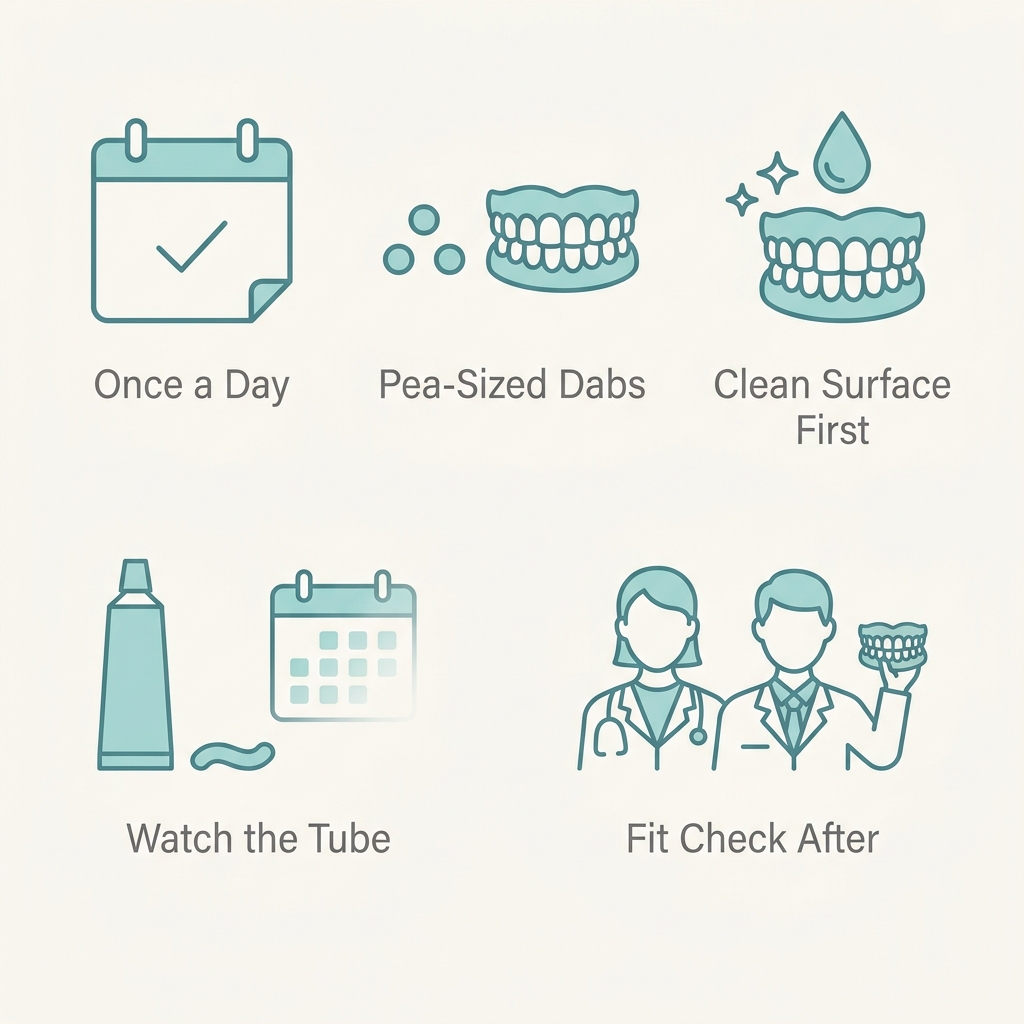
After you have made sure they’re completely clean and dry, you should then apply some denture adhesive, as this will help them adhere properly. Just make sure there isn’t too much leftover because that can cause problems. All you really need is a pea-sized dab on each denture, three to four dollops total, to keep your appliance stable without excess oozing.
Use the glue only once per day, as per directions on the tube, to avoid overuse. If you find yourself applying it more than once per day, it’s a sign your dentures may no longer fit properly and should be professionally evaluated in Dawson Creek.
Using zinc containing adhesives long term could result in problems such as hands and feet going numb or tingly. The agency warns that excessive use over time may lead to serious neurological or blood-related issues. Only use according to label recommendations.
Step 4: Adjust How You Chew and Speak
When you are wearing dentures that have been placed with the aid of adhesion, you need to take some care over what happens during eating times. You will be better able to ensure they stay in place if you chew slower than usual and also give an equal amount of each mouthful to both cheeks.
Begin by eating soft food in little bits then work up from there to firmer stuff as you gain more confidence. Try to bite less than usual and take time out between bites to let the denture settle. When some sounds don’t come naturally at first, read them aloud or repeat them until speaking with a denture feels natural.
It’s normal to feel some movement at first, but if your dentures still feel loose during meals or conversation after consistent practice, let us know so we can check the fit together.
Step 5: Soak and Store Your Dentures Properly
We adjust to wear and chew for some time, but another necessary habit is storage overnight. Storing dentures moist overnight prevents them from getting dry and warped, which affects their fit and comfort.
We recommend removing dentures at night and placing them in a covered container filled with lukewarm water or a denture cleanser solution. Avoid hot or boiling water entirely, as it can permanently damage the shape of the dentures. In the morning, rinse them thoroughly before putting them back in. This simple routine preserves the quality of your dentures and supports long-term oral health.
As an additional precaution, store your dentures inside a clean, dry container if you are going anywhere other than your home. It’ll stay fresh until you’re prepared to put them back on again.
Step 6: Schedule a Professional Denture Evaluation
Your dentures require regular washing as well as care when using them each day, however it might take a specialist to state if they really suit correctly and supply enough aid for your gums. If your dentures call for adhesive more than once daily, then they may not suit firmly anymore, consequently you would like to make certain they’re examined by means of a dentist. Using denture adhesive each day is not a permanent fix, because it can cover up the issue between the dentures and your gums and may eventually cause irritation or harm to the tissues inside the mouth.
We’ll be looking at how well your dentures fit you, examining your gum tissue to see if it appears healthy or inflamed and then talk about your dental care habits to help us decide which course of action will make sense: do we need another lining on yours, should we replace the base or might that not work either. We provide denture care and implant-supported options under one roof here in Dawson Creek, so follow-up treatment rarely requires a referral elsewhere.
Call us at (250) 782-3331 to book your evaluation – it’s a quick, routine visit that helps you stay comfortable and confident in your smile!
Step 7: Explore Long-Term Options, Relines, Rebases, and Implants
When a dental professional examines your dentures, the next step is choosing a lasting solution. Denture relining refreshes the base to restore fit as your gums change over time, whereas a denture rebase replaces the entire base material while keeping your existing teeth intact.
If you’re wearing an ill-fitting or sore denture, but have already taken good care of your appliance, don’t just put adhesive in your mouth. An improper amount of adhesive or continuous inflammation indicates it might be time to see a professional. The American College of Prosthodontists suggests dentures more than five years old should be replaced if they start cracking, or if they keep bothering your mouth. We’ve got relines, rebases, and implant-supported options all under one roof at our office here in Dawson Creek. This way you can explore the best path forward without needing extra referrals.
Troubleshooting Common Loose Denture Problems
If you’re wondering how to fix loose dentures, don’t immediately assume the problem lies within your dental paste. Dentures that fall out usually point towards fitting problems in your appliance, which usually won’t be fixed using more paste. If you apply extra glue to a poorly fitting denture, then you may only be covering up the issue instead of treating it. In other words, adhesives are often only a temporary band-aid.
Our team recommends using adhesives correctly: apply 3 to 4 pea-sized dollops per denture once daily, and never reapply throughout the day to compensate for poor fit. A standard 50g tube should last four to six weeks; if you’re going through tubes faster, it’s time to have the fit checked in Dawson Creek. Do not use hot or boiling water to clean dentures, as this can warp the material and worsen looseness.
Do:
- Use adhesives sparingly and only as directed.
- Schedule a professional evaluation if adhesives are needed more than once daily.
Don’t:
- Overapply adhesive to force a loose denture into place.
- Ignore persistent looseness or mouth sores, as these may indicate a need for relining or replacement.
If you’re worried about your dentures, we’re here to help ensure your smile stays comfortable and secure. Health Canada warns that long-term, excessive use of zinc-containing adhesives has been linked to neurological symptoms and blood disorders, reinforcing why professional care is essential. So get professional help to avoid any further issues.
Frequently Asked Questions
Is it safe to use denture adhesive to fix loose dentures at home?
Denture adhesive is a temporary fix that should be used only once per day. Apply 3 to 4 pea-sized dollops per denture, following the product’s directions. If you need adhesive more than once daily, your dentures likely no longer fit properly and require professional evaluation.
What are the professional options for repairing loose dentures such as relining or rebasing?
Professional options include denture relining, which refreshes the base to restore fit as gums change, and denture rebase, which replaces the entire base while keeping existing teeth intact. These procedures are performed by a dentist to improve comfort and stability.
When should I consider dental implants as a permanent solution for loose dentures?
Dental implants provide a permanent solution when dentures no longer fit securely. They anchor prosthetics to 2–4 implants, reducing movement by up to 80 percent. A dentist can determine if you are a suitable candidate during a professional evaluation.
Can a Dentist Fix Loose Dentures without Making a Whole New Set?
Yes, a dentist can often fix loose dentures without making a whole new set. Options include relining or rebasing the existing dentures to restore fit and comfort. A professional evaluation will determine the best approach.
Why do my Dentures Feel Loose Even if They Fit Well Before?
Dentures can feel loose over time because the structure of your mouth changes, especially around the gums and lower jaw bone. Daily wear and natural deterioration of the denture material can also contribute to looseness.
Keep Your Dentures Fitting Comfortably
The answer to how to fix loose dentures often starts with daily care and knowing when to seek professional help. We know comfort comes from keeping up with simple habits at home and recognizing when it’s time to call us in Dawson Creek.
According to the American Dental Association, if your dentures need adhesive more than once a day or still feel loose even with adhesive, it’s a clear sign they need professional attention rather than more glue. Dentures that are several years old, cracked, or causing ongoing sore spots or inflammation should also be assessed for replacement. And remember to keep hot or boiling water away from your dentures so they don’t warp.
Your Dawson Creek team is here to help keep your smile comfortable and secure. To book a denture checkup at our office contact us now.
Book Your Denture Check Today
You have now worked through the practical steps for caring for loose dentures, from assessing the fit and cleaning safely to applying adhesive correctly and storing your dentures overnight. You also know the warning signs that home care cannot solve, such as needing adhesive more than once a day or dentures that still slip despite your best efforts. When that happens, a professional evaluation is the safest next step, and our team at Northern Dental can assess your fit, examine your gum tissue, and review your adhesive habits. If your dentures need a longer-term solution, we offer relines, rebases, and implant-supported options under one roof, so follow-up care rarely requires a referral elsewhere. You can find us at #202 – 10312 12 Street, Dawson Creek, BC V1G 4S9, or call us at (250) 782-3331 to book a denture check. Comfortable, well-fitting dentures start with a simple conversation with our friendly team in Dawson Creek, British Columbia.
