


Table of Contents
- Dental Bone Graft Costs in British Columbia
- Why Bone Grafts Are Necessary for Dental Implants
- Key Benefits of Dental Bone Grafts for Implant Candidates
- Moving Forward with Dental Implants After Bone Grafting
Dental Bone Graft Costs in British Columbia
When researching dental bone graft cost in BC, many patients wonder what to expect. We provide transparent pricing at our Dawson Creek practice to help you plan your dental implant journey with confidence.
What Influences the Price?
In British Columbia, bone graft costs typically range from $300 to $800 per graft site. Several factors influence the final price:
- Graft material type (autograft, allograft, or xenograft)
- Case complexity, including sinus lift or ridge augmentation needs
- Number of graft sites required
- Geographic location within the province
Insurance and Financing
Many private plans offer dental insurance coverage for bone grafts in BC when the procedure is medically necessary for implant placement. We recommend checking with your insurer about specific benefits. For flexible payment options, explore our dental implants payment plans in British Columbia. We also coordinate direct billing with major insurance providers.
Get Your Personalised Estimate
The recovery timeline after bone grafting for implants starts with a thorough consultation. Contact our Dawson Creek office for a detailed cost breakdown tailored to your needs. Call Us today to schedule your appointment now.
Why Bone Grafts Are Necessary for Dental Implants
Before an implant can be placed, the jawbone must have adequate density to support it. For many patients considering this tooth-replacement solution, the dental bone graft cost bc can be a secondary concern once they understand why the procedure is so vital. A bone graft rebuilds the foundation that time or disease has worn away, giving your new tooth the best possible start.
What Is a Dental Bone Graft?
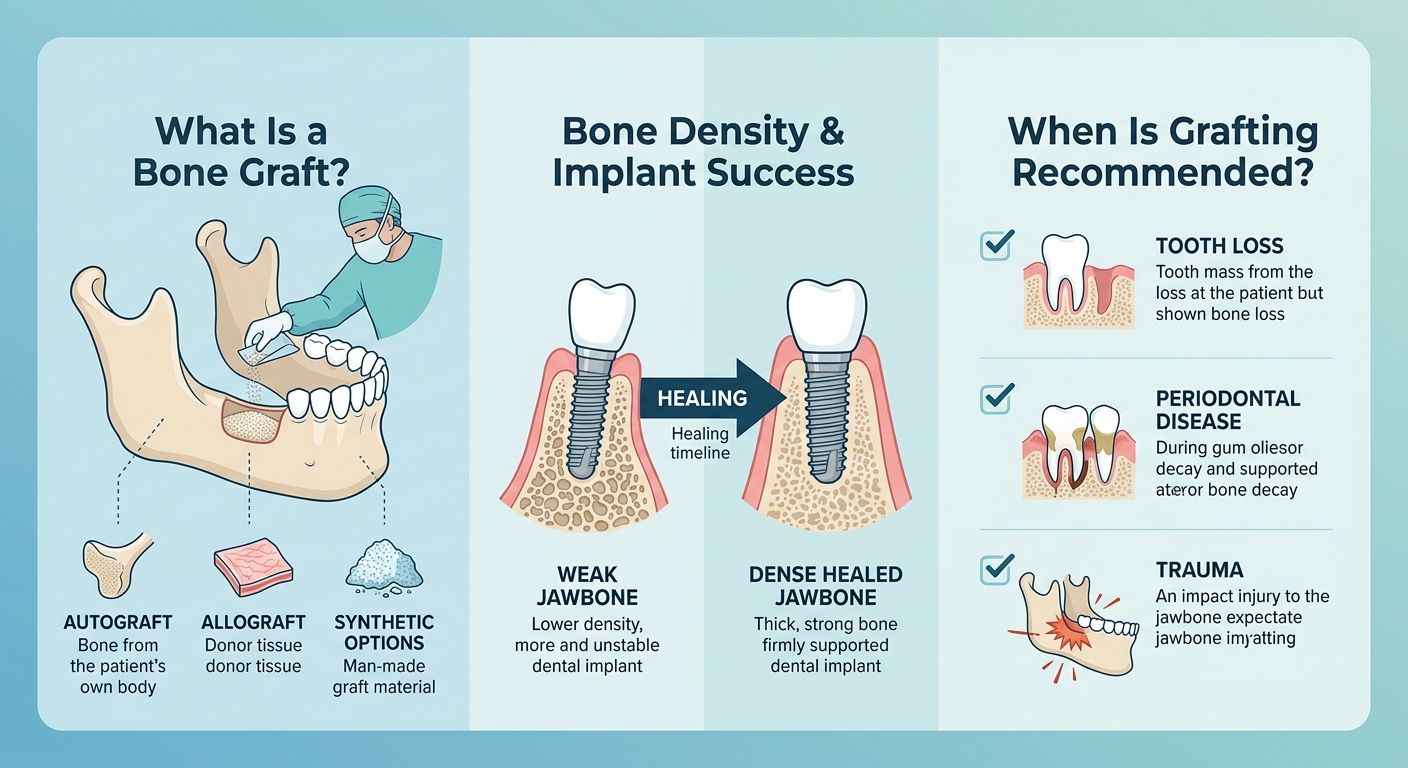
A dental bone graft is a procedure that restores lost volume in your jaw. We use grafting material—which may be an autograft from your own body, an allograft from a human tissue bank, a xenograft from an animal source, or a synthetic option—to create a stable base. At Northern Dental in Dawson Creek, we select the material best suited to your health history and the location of the future implant.
Sufficient bone volume is the single most important factor for implant stability. Without it, a post cannot integrate properly, and the restoration may fail under the pressure of everyday chewing. This is why the Canadian Dental Association emphasizes grafting as a prerequisite whenever natural bone has diminished, ensuring the long-term success of your smile.
The Link Between Bone Density and Implant Success
Your jawbone needs constant stimulation from tooth roots to maintain its shape and density. Once a tooth is lost, that section of bone begins to shrink in a process called resorption. Over time, the ridge can become too thin or shallow to hold an implant securely. This natural decline is something we see often in our Dawson Creek patients, especially those who lost teeth years ago.
The most common local causes of low bone density are long-term edentulism, advanced periodontal disease, and trauma. According to the Canadian Dental Association, bone grafting is a standard step for rebuilding this lost structure, enabling the implant to fuse with living tissue in a process called osseointegration. When density is restored, the implant can withstand the same forces as a natural tooth.
Educational infographic on bone grafts for dental implant patients
When Is a Bone Graft Recommended?
We typically recommend a graft if you have experienced extended tooth loss, suffer from severe gum disease, or have suffered a facial injury that damaged the bone. A failed previous implant that left a defect is another clear indication. In these scenarios, placing an implant without augmentation would be like building a house on sand.
For the small number of patients who cannot undergo grafting, alternatives such as short or zygomatic implants exist, though they are less common and have narrower indications. Your recovery path matters, and understanding the dental bone graft for implants recovery process helps set realistic expectations; most patients return to normal routines within a few days.
We know that planning for treatment involves financial questions. While the cost varies, there are pathways to make it manageable—dental insurance coverage for bone grafts bc may offset a portion through your plan, and there are flexible dental implant financing in British Columbia options available to help. Once we’ve established that a bone graft is needed, the next step is understanding the procedure. If you have questions, give us a call.
Key Benefits of Dental Bone Grafts for Implant Candidates
Choosing to replace a missing tooth is a big decision, and understanding how to build a strong foundation for your new smile is key. While understanding dental bone graft cost in BC is a common first step, the true investment lies in the health and confidence that a stable new tooth provides. Bone grafting is not just an additional procedure; it’s a transformative step that ensures your dental implant is built to last, looks natural, and protects your overall oral health for years to come.
Improved Implant Stability and Longevity
The primary goal of a dental bone graft is to create a foundation that mimics the density and strength of your natural jawbone. When we place a dental implant into grafted bone, we’re securing it in a solid, integrated structure that can withstand the daily forces of chewing and speaking. This significantly reduces the risk of implant failure compared to placement in compromised, weakened bone.
Our approach combines this biologic foundation with precise digital planning. We use advanced 3D imaging technology to map your jaw and virtually place the implant before your procedure. This integration of a dense bone graft with digital precision, as detailed in our digital dentistry guide, leads to unmatched accuracy. When you pair great biology with smart planning, the result is a restoration that functions comfortably and can last for decades with proper at-home care. During your consultation, it’s also helpful to discuss how we always review your dental insurance coverage for bone grafts in BC to maximize your benefits.
Preservation of Jawbone Structure
When a tooth is lost, a process called resorption begins, where the body starts to break down and absorb the mineral content of the jawbone at the empty site. Over time, this can lead to a sunken-in facial appearance and weaken the support for neighboring teeth. A bone graft immediately halts this deterioration, preserving your natural facial contours and maintaining the height and width of your jaw.
Getting a graft placed soon after an extraction leads to the most predictable and aesthetic outcomes. By preventing further bone loss early, you’re essentially simplifying your future care. A well-maintained jaw site means the subsequent dental bone graft for implants recovery process becomes smoother and faster, often requiring less extensive grafting. Your body has a preserved, healthy framework to heal around, which is a crucial advantage for your comfort and overall treatment timeline.
Expanded Candidacy for Dental Implants
One of the most hopeful benefits of bone grafting is that it opens doors for patients who were previously told they were not candidates for implants. If you’ve been living with dentures or a gap for years and have experienced significant bone loss, you may now have a solution. Bone grafting can rebuild the lost width and height of your jaw, quite literally laying the groundwork for you to move forward with the stable, permanent tooth replacement you desire.
This benefit isn’t limited to single-tooth replacement. For patients needing full-arch rehabilitation, grafting techniques make life-changing solutions like All-on-4 a possibility. At our practice in Dawson Creek, we routinely help patients who feared they had run out of options discover that they can become eligible candidates. To make these treatments more accessible, we offer flexible dental implants financing in British Columbia that can be discussed during your consultation. Now that you understand the powerful benefits of creating a strong dental foundation, the next natural step is to discuss what the procedure involves and the straightforward path to restoring your smile. Visit Us Today!
Moving Forward with Dental Implants After Bone Grafting
The healing phase after your graft is a crucial step that builds the foundation for a strong implant. It generally takes four to six months for the bone to fully integrate and become dense enough to support a titanium post, though the exact timeline varies by individual. During this period, following a gentle dental bone graft for implants recovery process is manageable when you stick to soft foods and keep the area clean, and we are here to guide you every step of the way.
Once your jaw is ready, we will schedule a follow-up consultation to confirm the graft has healed properly. This is an ideal time to review the total investment; we provide transparent pricing so you know exactly what to expect. If you are researching the dental bone graft cost bc, we will break down the fees during your visit and highlight flexible payment plans for dental implants in BC that fit your budget. Understanding your benefits is equally important, so please ask us about dental insurance coverage for bone grafts bc—our team is happy to coordinate directly with major providers to maximize your plan.
We have got all your dental needs covered under one roof at our practice in Dawson Creek, and we want you to feel confident moving forward. With a clear recovery behind you and a personalized financial plan in hand, scheduling your implant surgery is the next exciting step toward restoring your smile. Call Us today to book your consultation or Visit Us Today! and let us help you take that step with confidence.
